
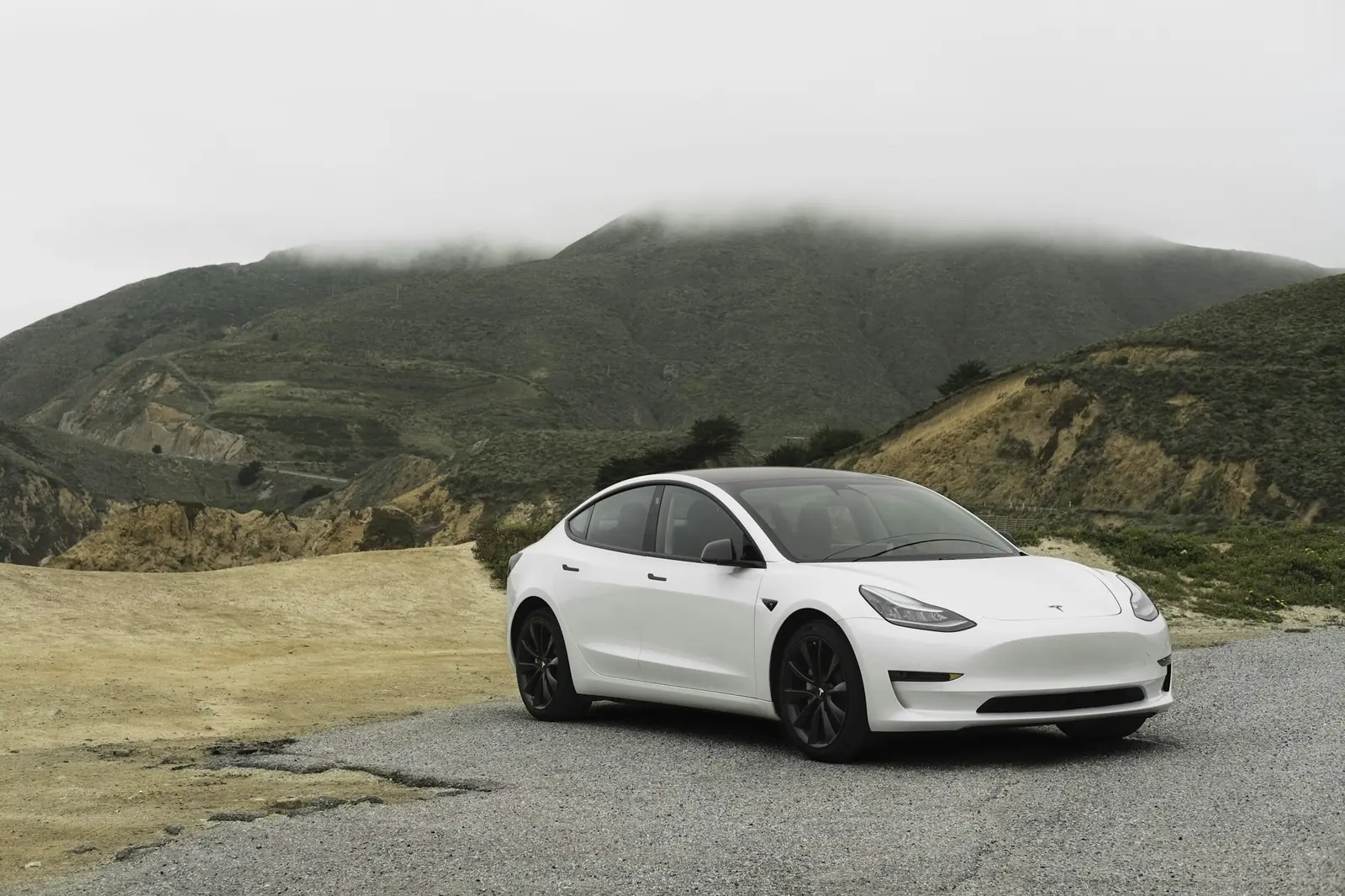
Common versions and batteries
The Model 3 has changed a lot since launch, and each generation and version has a different battery. These are the figures for two versions of the updated generation as listed by the specialist site EV Database:
| Version | Battery (approx. usable) | Chemistry | Max DC power | Range (WLTP) |
|---|---|---|---|---|
| Latest rear-wheel drive (RWD) | About 60 kWh | LFP | About 175 kW | 572 km |
| Long Range all-wheel drive (2023 to 2025) | About 75 kWh | NMC | 250 kW | 629 to 678 km depending on trim |
Older versions have different figures. If you are not sure which one you have, the car's screen shows the battery type and the recommended charge limit, and the importer will know the build year and market.
The inlet depends on the market
- Europe and the Middle East: the CCS2 inlet (the "European" connector).
- The Chinese market: the GB/T inlet (the "Chinese" connector).
- North America: the Tesla inlet (NACS), which needs a compatible adapter on other chargers, and not every adapter works with every charger.
The full explanation, including adapters, is on the Tesla charging page.
How long from 20% to 80%?
The Model 3 accepts high power, so the charger usually sets the pace rather than the car. The energy from 20% to 80% is about 36 kWh with the 60 kWh battery and about 45 kWh with the 75 kWh battery. These are worked estimates based on the average power the charger delivers, not measurements:
| Average power during the session | About 60 kWh battery | About 75 kWh battery |
|---|---|---|
| 50 kW | About 43 minutes | About 54 minutes |
| 100 kW | About 22 minutes | About 27 minutes |
EV Database lists 10% to 80% times of roughly 24 to 27 minutes for these two versions, but those are on very high-power chargers in ideal conditions. On any charger, the actual power is the lower of the charger's power and what the car accepts at that moment. The formula is in the charging time guide.
Battery preconditioning
A Model 3 charges fastest when its battery is warm. It preconditions automatically when you navigate to a Tesla Supercharger; for other chargers, recent software versions let you start preconditioning manually from the charging menu. Switch it on about 15 to 20 minutes before you arrive, especially in winter. Read charging in summer and winter.
LFP or NMC: what limit to charge to?
For rear-wheel-drive versions with an LFP battery, Tesla usually recommends a charge limit of 100%; for NMC versions it recommends a lower daily limit, often between 80% and 90%. The recommendation for your car appears on its charging screen, so follow it. And on a fast charger, remember that charging is much slower after 80%.
How far does a Tesla Model 3 go?
EV Database estimates the real-world range of the latest rear-wheel-drive version at about 445 km on the motorway in mild weather and about 330 km on the motorway in severe cold, against 572 km WLTP. A Jordanian summer with the air conditioning on and hilly roads can change these figures too. Explained in how far an electric car really goes.
If your car is US-spec
A Model 3 built for North America needs an adapter from the Tesla inlet (NACS) to the charger's connector. Before you rely on one for fast charging, check three things: that it is designed for DC fast charging, not only AC; that it comes from a trustworthy source; and that it is compatible with the charger type and your car's software. The wrong adapter may not start a session at all, or may cut it off after a few minutes.
Model 3 tips
- Arrive at the charger with a fairly low battery; power is highest in the first minutes.
- Do not use an adapter of unknown origin if your car is US-spec.
- If your car shows range in kilometres, also watch consumption on the energy screen to plan more accurately.
Charging a Model 3 in Zarqa
FAST RANGE is on Army Street in Zarqa, opposite Prince Hashem Military Hospital, near the old Zarqa bus complex and the Civil Status Department. It is not a Tesla station, but Teslas charge on public fast chargers like any other electric car, as long as the inlet matches.
Frequently asked questions
How long does a Tesla Model 3 take to charge?
On a fast charger averaging about 100 kW, roughly 22 to 27 minutes from 20% to 80% depending on the battery, and longer on a lower-power charger. On a home AC charger it takes hours.
How many kW can a Tesla Model 3 take?
According to EV Database, the latest rear-wheel-drive version accepts up to about 175 kW and the Long Range all-wheel-drive version up to 250 kW. The actual power is limited by the charger and battery temperature.
How far does a Tesla Model 3 go on one charge?
EV Database lists 572 km WLTP for the latest rear-wheel-drive version and estimates about 445 km of real-world motorway range in mild weather. Figures vary with version, weather and speed.
What charging port does a Tesla Model 3 have?
It depends on the market it was built for: CCS2 for Europe and the Middle East, GB/T for China, and the Tesla inlet (NACS) for North America, which needs a compatible adapter.
Should I charge my Tesla Model 3 to 100%?
For LFP versions Tesla usually recommends a 100% limit, and for NMC versions a lower daily limit. Follow the recommendation shown on your car's charging screen.