
Why does temperature matter to the battery?
A lithium battery works best at a moderate temperature. When it is very cold, the chemistry inside slows down and it cannot safely take a high current. When it is very hot, stress and ageing increase. The battery management system knows this and cuts charging power in both cases, and many cars have battery heating and cooling systems to keep it within the right range. What you notice is slower charging or less range, and that is usually the car protecting its battery as designed.
Summer: heat and air conditioning
How heat affects charging speed
After a long motorway drive on a hot day you may arrive at the charger with a hot battery. The car may then start the session at lower power than usual, or reduce it after a few minutes, while running its cooling system. Charging may feel slower, but it is not a fault in the charger. Waiting a few minutes before plugging in rarely helps much, since the cooling runs during the session anyway.
How air conditioning affects range
The air conditioning runs off the same battery. As a percentage, its effect is most noticeable in slow city driving and traffic, where the car uses little energy to move, so the AC's share is larger. On the motorway its share is smaller compared with air resistance. The size of the effect varies a lot with the car, the temperature and the type of system.
Summer tips
- If your car lets you cool the cabin from its app, do it before you set off while the car is still plugged in at home, so the energy comes from the grid instead of the battery.
- Park in the shade where you can, and avoid leaving the car charged to 100% in the sun for hours.
- Check tyre pressure regularly, as low pressure raises consumption.
- On long trips, plan a bigger range margin. Read EV road trips from Zarqa.
Winter: cold and slower charging
Why does charging slow down in the cold?
A cold battery cannot take a high current without damage, so on winter mornings the session starts at low power and rises as the battery warms. LFP batteries, such as BYD's Blade battery, are more affected than NMC batteries. If you arrive after a cold night without a long drive, expect the first minutes to be slower.
Battery preconditioning
Some cars warm the battery automatically when you set a charger as the destination in the navigation, and others let you switch it on manually from the charging menu. If your car supports it, start it about 15 to 20 minutes before you arrive. The feature varies between cars and software versions, so check your manual.
Heating and range
Heating the cabin uses energy, and cars with a heat pump usually use less than those with a simple electric heater. Heated seats and a heated steering wheel use far less than heating the whole cabin. Short, repeated trips in the cold use the most, because the car has to warm everything up again each time.
Winter tips
- Charge after driving, not before, when the battery is warmer and accepts more power.
- Use preconditioning if your car has it, or navigate to the station.
- Use the seat heaters instead of turning the cabin temperature right up.
- Warm the cabin while the car is plugged in at home if you can.
Quick summary
| Season | What may happen | What to do |
|---|---|---|
| Summer | Slower charging after a long drive, more AC use in traffic | Cool the cabin while plugged in, park in the shade, keep a margin on trips |
| Winter | Slow start to charging, less range because of heating | Charge after driving, precondition the battery, use the seat heaters |
When is slow charging not normal?
If charging is always slow in mild weather, on every charger, after normal driving, it is worth having it checked by the dealer or a service centre. To see what is normal for your car, read how long it takes to charge an electric car, and for how heat affects battery life, read does fast charging damage the battery.
Charging under the canopy in Zarqa
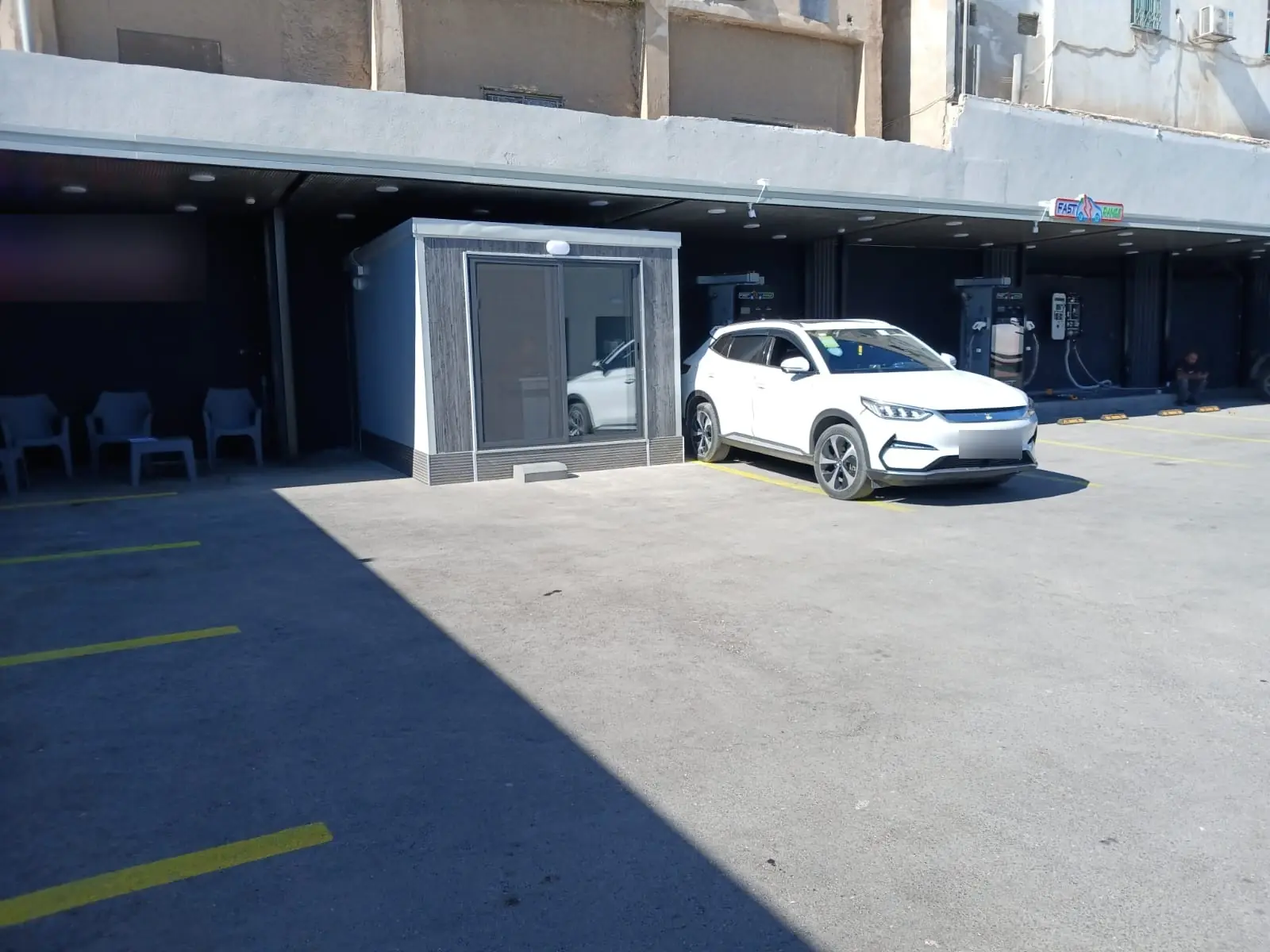
FAST RANGE is on Army Street in Zarqa, opposite Prince Hashem Military Hospital, near the old Zarqa bus complex and the Civil Status Department. The chargers and the seating are under a canopy, so you wait in the shade in summer and out of the rain in winter.
Frequently asked questions
Does heat affect an electric car in summer?
Yes, though usually only to a limited degree. Heat can slow charging after a long drive, because the car protects a hot battery, and the air conditioning uses some energy, especially in traffic.
Why does EV charging get slower in winter?
A cold battery cannot safely take a high current, so the session starts at lower power and rises as the battery warms. Charging after driving and preconditioning both help.
Does the air conditioning use a lot of an EV's battery?
It uses some energy, and the effect is most noticeable in slow city driving. The amount depends on the car and the temperature, and cooling the cabin while plugged in at home saves battery.
What is battery preconditioning before charging?
A feature on some cars that warms or cools the battery before you reach the charger so it accepts more power from the start. If your car has it, switch it on about 15 to 20 minutes before you arrive.
Can you charge an electric car in the rain?
Yes. Chargers and connectors are designed for outdoor use, and charging does not start until the charger has confirmed the connection is safe. Our chargers are also under a canopy.