
Energy and power
kW (kilowatt)
The unit of power, meaning how fast energy flows. When the charger screen shows 50 kW, the battery is taking in energy at a rate that would add about 50 kWh in an hour if the power stayed constant. The figure printed on a charger is a ceiling; the car decides how much of it to take.
kWh (kilowatt-hour)
The unit of energy. For an electric car it plays the role a litre plays for a petrol car. Battery capacity is measured in it (60 kWh, for example), as is the energy you charge and the car's consumption per 100 km. Remember: kW is speed, kWh is quantity.
AC (alternating current)
The current that reaches homes from the grid. With AC charging the car converts it itself through its on-board charger, which is why it is slower. See AC vs DC charging.
DC (direct current)
The current the battery stores. A fast charger converts the current internally and sends direct current straight to the battery, which is why it is so much faster.
Charging curve
A graph of charging power over the session, plotted against battery level. In most cars power is high at first and then tapers, dropping further after about 80%. Two cars with the same peak power can differ a lot in total time, because what counts is the average, not the peak.
The battery
SoC (state of charge)
The percentage you see on the screen. "From 20% to 80%" means charging from an SoC of 20 to an SoC of 80.
BMS (battery management system)
The brain that monitors every cell in the battery: temperature, voltage and current. It tells the charger how much power to deliver, and cuts it back when the battery is cold, very hot or nearly full.
Preconditioning
Warming or cooling the battery before you reach the charger so it is at the right temperature and accepts more power from the first minute. Some cars do it automatically when you navigate to a charger; others let you switch it on manually. It helps most on winter mornings.
LFP (lithium iron phosphate)
A battery chemistry known for handling heat well and lasting many charge cycles, and for tolerating full charges better than others. BYD's Blade battery is LFP. It charges more slowly in the cold than NMC.
NMC (nickel manganese cobalt)
A chemistry that stores more energy for its weight, giving more range from a battery of the same size. The usual advice is to charge to about 80% or 90% day to day and keep 100% for trips. Follow your car's manual.
Connectors
CCS2 (the "European" connector)
One inlet in two parts: the upper Type 2 section for AC and the lower section with two large pins for DC fast charging. You find it on European, Korean and GCC-spec cars and on many Chinese cars built for export.
GB/T (the "Chinese" connector)
The Chinese national standard, with the fast-charging inlet separate from the slow-charging one; the fast inlet is the larger of the two. It is very common in Jordan because many cars are imported to Chinese-market spec.
CHAdeMO
The older Japanese fast-charging standard, best known from the Nissan Leaf. It is now rare on new cars.
NACS (the Tesla connector)
The small inlet on Teslas built for North America, now being adopted by other makers there. These cars need a compatible adapter to charge on CCS2 or other chargers. Details in the EV charger types guide.
Car types and driving
PHEV (plug-in hybrid)
A car with a petrol engine and a battery you charge from the grid, so it can cover a short daily distance on electricity alone before falling back on petrol. Its battery is much smaller than a full EV's, and many PHEVs charge on AC only.
DM-i
BYD's name for its fuel-saving plug-in hybrid technology, used in versions of the Song Plus and Qin Plus. In Jordan people often call these "BYD electric and petrol". Some versions support DC fast charging at limited power. See BYD Song Plus charging.
EREV (extended-range electric vehicle)
A car whose wheels are always driven by electric motors, with a small petrol engine that only acts as a generator to recharge the battery when needed. Its battery is usually bigger than a PHEV's, and many support fast charging.
Regenerative braking
When you lift off the accelerator or brake, the electric motor works as a generator and sends some of the car's kinetic energy back into the battery. It helps a lot on descents and in traffic, but it never recovers all the energy spent climbing.
CLTC and WLTP
Two standards for measuring advertised range: the Chinese CLTC and the European WLTP. The CLTC figure is usually the higher of the two for the same car. Explained in how far an electric car really goes.
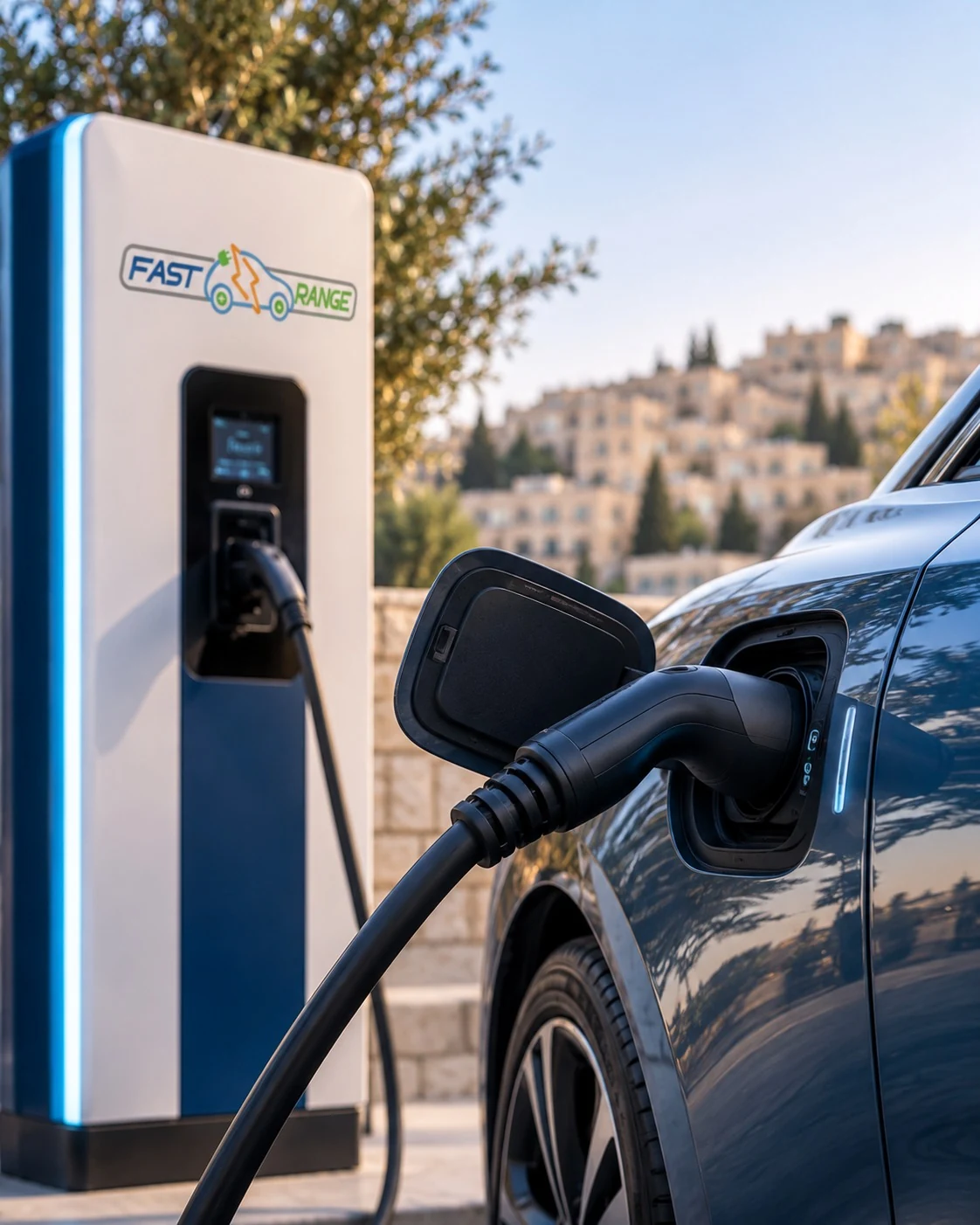
Want to see these terms on a real screen? FAST RANGE is on Army Street in Zarqa, opposite Prince Hashem Military Hospital, near the old Zarqa bus complex and the Civil Status Department. The charger screen shows power in kW, energy in kWh and the battery level throughout the session.
Frequently asked questions
What does kWh mean for an electric car?
A kilowatt-hour is a unit of energy. Battery capacity, the energy you charge and the car's consumption are all measured in it. It plays the role a litre plays for a petrol car.
What is the difference between kW and kWh?
kW is power, meaning charging speed. kWh is energy, meaning quantity. A 50 kW charger adds about 50 kWh in an hour if the power stays constant.
What is a PHEV?
A plug-in hybrid: a car with a petrol engine and a battery charged from the grid, so it covers a short distance on electricity and then uses petrol.
What is an LFP battery?
A lithium iron phosphate battery. It handles heat well, lasts many charge cycles and tolerates full charges better than others. It charges a little more slowly in the cold.
What does DM-i mean on a BYD?
It is BYD's fuel-saving plug-in hybrid technology that combines petrol and a battery. Some versions support DC fast charging and some charge on AC only.