
The short answer
Your car's battery stores energy as direct current (DC), while the grid at home and in the street supplies alternating current (AC). So the current has to be converted somewhere. With AC charging, the conversion happens inside the car, in a unit called the on-board charger. With DC fast charging, it happens inside the charger itself, which is a much bigger and more powerful machine, so direct current flows straight into the battery.
That is why AC charging is limited by the size of your car's on-board charger, while DC charging is limited by what the battery and its management system will accept, and by the charger's own maximum power.
Side by side
| AC charging | DC fast charging | |
|---|---|---|
| Where the current is converted | Inside the car | Inside the charger |
| Typical power | From about 2 kW on a regular socket to 7 or 11 kW on a wallbox, depending on the car and the wiring | Tens of kilowatts and more, depending on the charger and the car |
| Typical session | Hours, often overnight | Minutes; in many modern cars about 30 minutes from 20% to 80% |
| Where you find it | Home, workplace parking, some public car parks | Fast-charging stations |
| Port on the car | Type 2, or the smaller GB/T inlet | CCS2, the larger GB/T inlet, or others |
| Best for | Long stays and overnight charging | Trips, busy days, and drivers with no charger at home |
Why is AC charging slower?
The on-board charger has to be small, light and easy to cool, so its power is limited. Many cars come with an on-board charger of about 7 kW, some with 11 kW, and some small cars and plug-in hybrids with less. Even if you plug into a more powerful wallbox, the car will not charge faster than its on-board charger allows. The exact figure for your car is on its spec sheet.
A worked example: a 60 kWh battery needs about 36 kWh to go from 20% to 80%. At 7 kW of AC power, that takes about 5 hours, a little more once you allow for losses.
Why is DC charging faster?
A fast charger houses large, cooled power converters, so it can deliver far more power. Throughout the session the charger talks to your car's battery management system (BMS), and the car requests the right amount of power moment by moment based on battery temperature and charge level. That is why power is high at the start and then tapers, especially after about 80%. The full explanation and formula are in the charging time guide.
The actual power in any session is the lower of what the charger can deliver and what your car can accept.
Is DC charging harder on the battery than AC?
Fast charging raises battery temperature and current more than slow charging, but the battery management system watches both and cuts power when needed. The data available does not show significant harm from normal use of fast charging; high heat and sitting at 100% for long periods matter more. Details in does fast charging damage the battery.
How to tell the AC and DC ports apart on your car
- GB/T cars built for the Chinese market: two separate inlets. The smaller one is for AC, the larger one for DC fast charging.
- CCS2 cars built to European, Korean or GCC specs: one inlet in two parts. The upper Type 2 part is for AC, and the lower part with two large pins works together with it for DC.
- Plug-in hybrids: many have an AC inlet only, and some support DC at limited power.
The connector types are explained in the EV charger types guide, and the terms in the EV charging glossary.
Which one do you need?
- If you have a private parking space and drive a normal daily distance, overnight AC charging at home covers most of your needs. Read charging an electric car at home.
- If you live in an apartment without a private space, drive long distances every day, or work for a ride-hailing app, DC fast charging gets you back on the road in minutes.
- For trips between cities you will usually need fast charging. Read EV road trips from Zarqa.
Most owners use both: AC when the car is parked for hours, DC when time matters.
DC fast charging in Zarqa
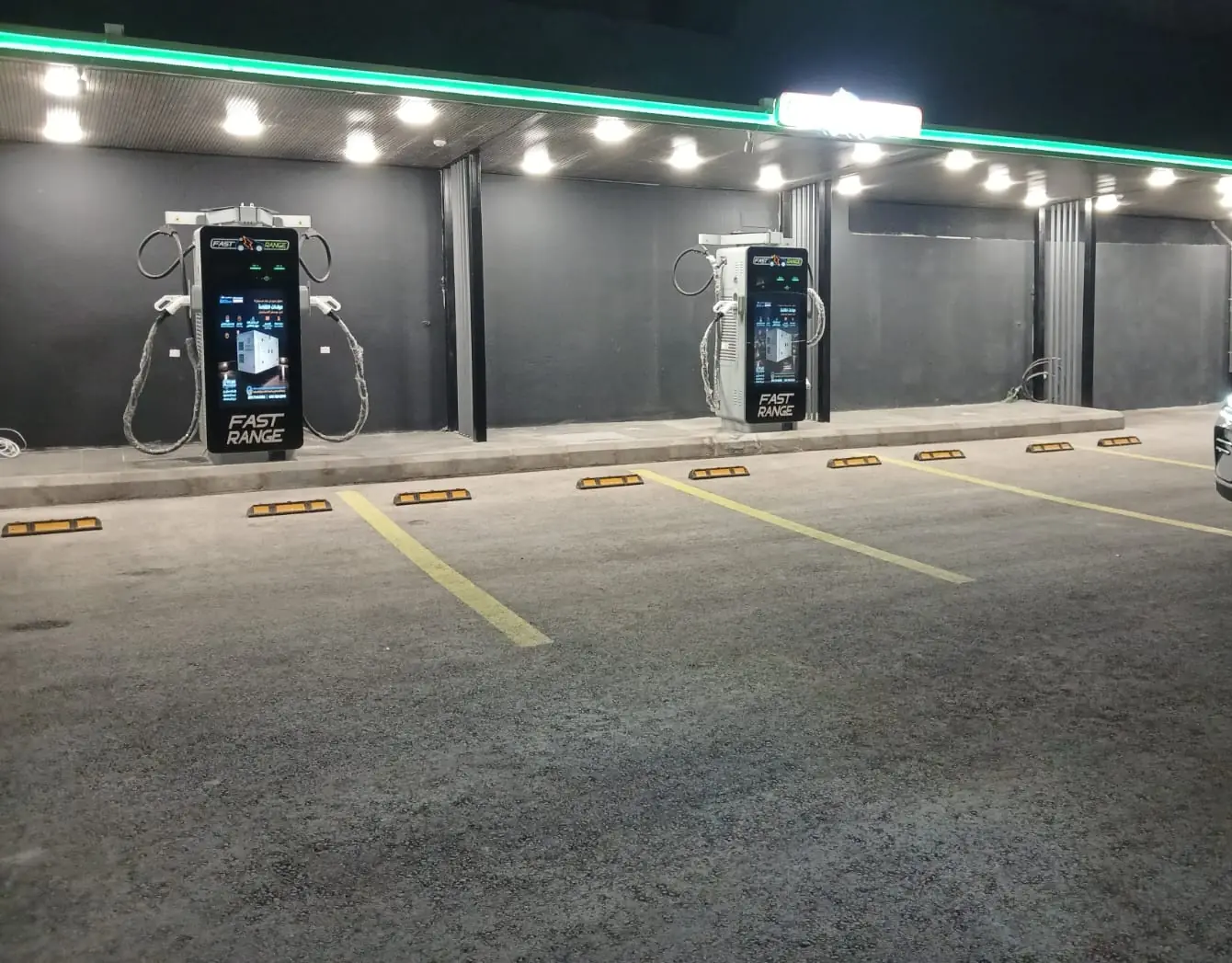
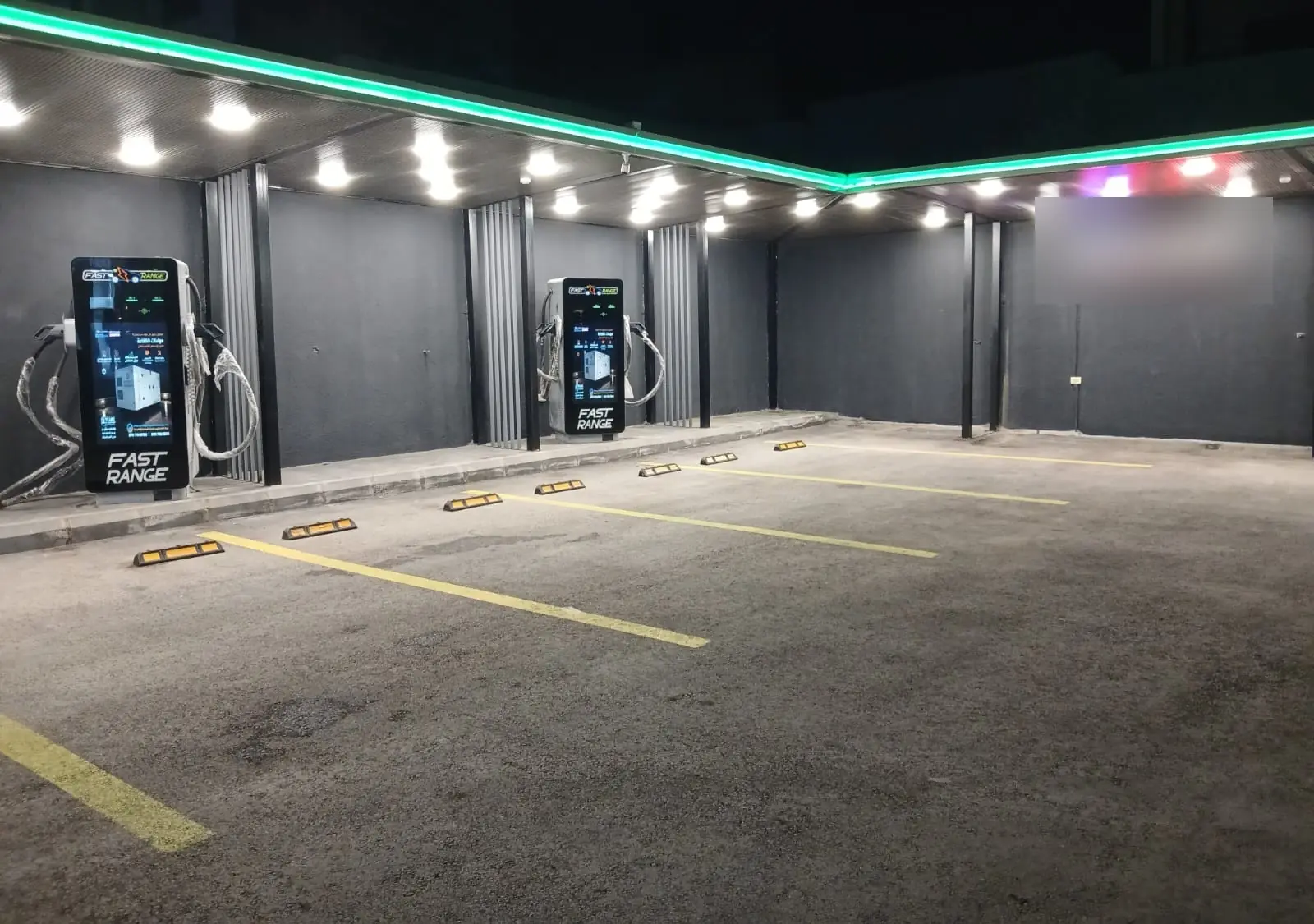
FAST RANGE is on Army Street in Zarqa, opposite Prince Hashem Military Hospital, near the old Zarqa bus complex and the Civil Status Department. The chargers are DC fast chargers, and the screen shows the power and battery level throughout the session. To see what you will find at the station before you visit, read EV charging in Zarqa.
Frequently asked questions
What is the difference between an AC and a DC charger for an electric car?
With an AC charger the current is converted inside the car by its on-board charger, so power is limited and charging is slow. With a DC charger the conversion happens inside the charger and the current goes straight to the battery, so charging is much faster.
What is the difference between fast and regular charging?
Regular AC charging usually takes hours, often overnight, while DC fast charging takes minutes. In many modern cars a fast charger takes the battery from 20% to 80% in about 30 minutes, though the actual time depends on the car and battery temperature.
Do all electric cars support DC charging?
Most fully electric cars do, but some budget models and many plug-in hybrids only charge on AC. If you cannot find a fast-charging inlet on your car, check its spec sheet.
Why does my car not charge faster on a powerful home charger?
Because AC charging is limited by the on-board charger inside the car. If it is rated at 7 kW, the car will not charge faster than that, even on a bigger wallbox.
What does AC charging mean on a car?
It means charging with alternating current, the slower kind of charging you use at home or on regular chargers. The car converts the current to direct current itself before storing it in the battery.